From the First Text Message to Digital Invitations: A Short History of a Big Shift
Text messaging arrived long before smartphones. Here is how a two-word message helped open the door to a new way of inviting people.
Published August 28, 2026
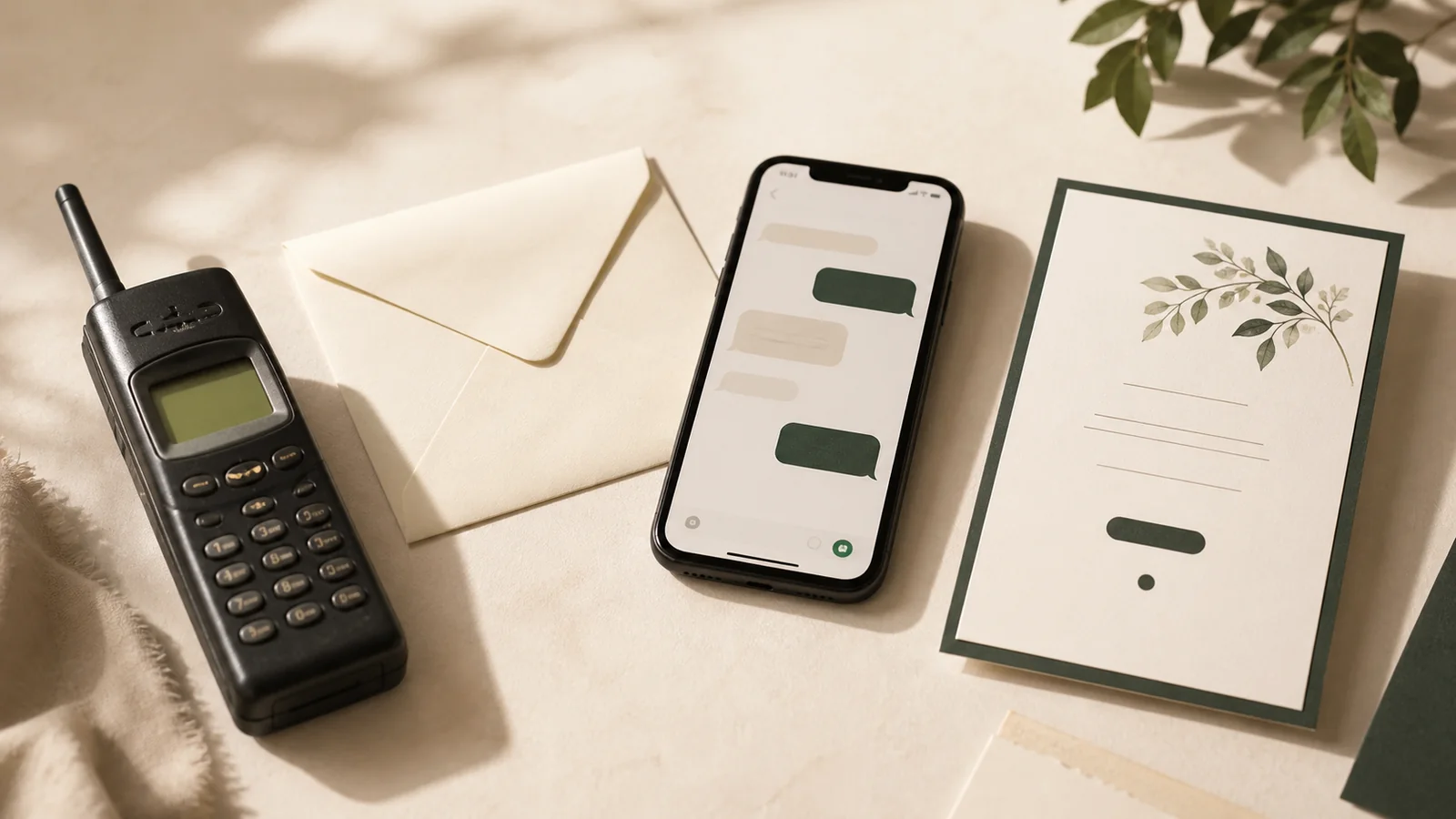
Today, receiving an invitation by text feels natural: a phone vibrates, a link opens, and every event detail appears in one place. That simple experience rests on more than thirty years of change.
It started on December 3, 1992
The first SMS was sent in the United Kingdom by engineer Neil Papworth over Vodafone’s network. It came from a computer and simply wished a colleague “Merry Christmas.” The receiving phone could not even reply.
SMS was originally limited to 160 characters. That constraint created a direct style: get to the point, choose the right words, and deliver information immediately.
Texting took off at the end of the 1990s
In the early years, messages did not always move easily between different networks. Vodafone points to 1999 as the moment cross-network texting became widely possible. SMS then moved from technical novelty to daily habit.
Event organizers quickly understood the advantage: unlike a call, a text can be read at the right moment; unlike mail, it arrives almost immediately.
From plain text to invitation link
Smartphones and the mobile web changed the role of SMS. It no longer had to contain the entire invitation; it could become the doorway to a visual card, map, date, RSVP, and updated information.
That is the model digital invitations use today: a short, recognizable message leads to a richer experience designed for the screen guests already have in hand.
Why this format works so well for events
- A phone number is often more current than a mailing address.
- One link can bring together the venue, time, details, and RSVP.
- The guest does not need to install an app.
- The organizer can track replies without recounting paper cards.
Text messaging did not replace the emotion of an invitation. It simply made its arrival more direct.
What comes next?
Invitations will continue to evolve through animation, personalization, and artificial intelligence. But the principle behind the success of the first SMS remains the same: deliver the right message to the right person, simply.